 Турция
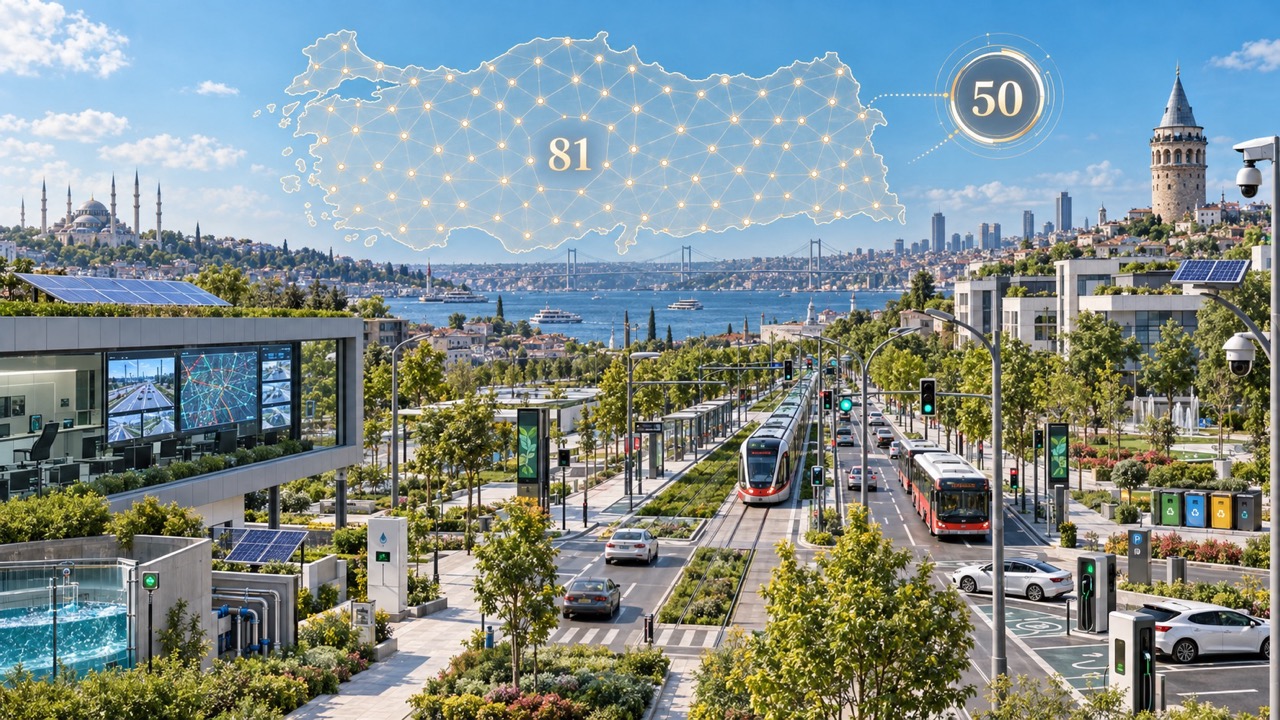
Turkey is expanding its national programme for the digital transformation of cities. Under the five-year strategy, intelligent systems are planned to be introduced across all 81 provinces, covering transport, municipal services, energy supply, waste management, safety and other areas of urban life.
The National Smart Cities Strategy and Action Plan will remain in effect through 2030. By the end of 2026, individual roadmaps are expected to be prepared for every province, taking into account regional characteristics, population, existing infrastructure and the current needs of municipalities.
By 2028, the authorities intend to implement at least 50 technological solutions. These include real-time traffic management systems, route optimisation for public transport and municipal service vehicles, smart street lighting, smart parking, monitoring of waste-bin capacity, and sensors designed to detect water leaks and electricity losses.
Particular attention will be paid to emergency preparedness. Cities are expected to develop digital monitoring systems, early-warning mechanisms and platforms for coordinating emergency services. Artificial intelligence, big data, the Internet of Things and digital twins will be used to manage urban infrastructure.
One of the programme’s existing components is the national Traffic Density Analysis Platform, TYAP. It enables authorities to monitor current and historical road congestion, identify peak hours, analyse vehicle queue lengths and use the collected data when planning transport infrastructure.
Interoperability between different digital solutions is expected to be ensured by the national RUMİ architecture. Common standards will allow municipal systems to exchange data and enable successfully implemented technologies to be replicated in other cities with similar needs.
In 2027, 187 district municipalities are expected to join the programme. Development plans based on geographic information systems are to be prepared in a total of 268 municipalities. By 2029, digital city management centres are planned to open in every province, allowing authorities to monitor traffic flows, lighting, street cleaning and municipal services.
The digital transformation will also extend to new residential districts. Urban renewal and housing projects are expected to incorporate energy-efficient technologies, clean energy sources, resource-monitoring systems and the concept of a smart neighbourhood.
The development of these solutions is particularly relevant to Istanbul, Antalya, Alanya and other rapidly growing Turkish cities, where population growth and increasing tourist numbers place additional pressure on roads and municipal infrastructure.
For the real estate market, the quality of the urban environment is becoming an increasingly important factor. Convenient transport, efficient municipal services, safety and responsible use of resources can improve living standards and enhance the investment appeal of individual districts.