 ОАЭ
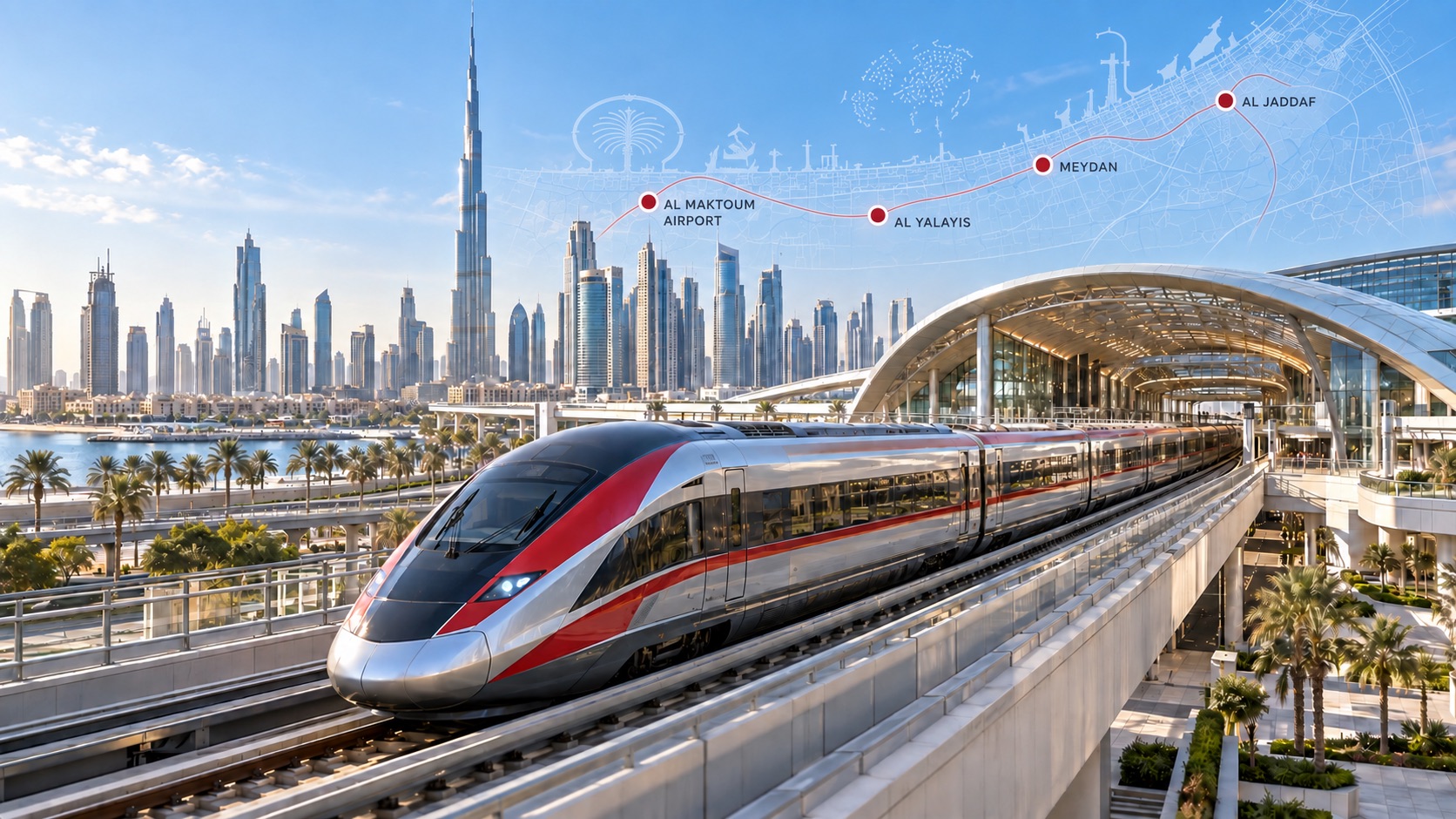
Dubai is set to have four railway stations connected with the development of the national Etihad Rail network and the future high-speed railway between Dubai and Abu Dhabi. The new transport hubs will form part of the emirate’s major public transport expansion and provide connections to existing and planned Dubai Metro lines.
Two stations will serve the national Etihad Rail passenger network. The first is Al Yalayis Station, located near Jumeirah Golf Estates. It opened on 30 September 2026, providing Dubai with a direct railway connection to other cities and regions of the UAE.
The second station on the national network has not yet been officially named. It is shown in the Meydan area on the Dubai Rail Network 2032 map. The future transport hub is expected to be integrated with other forms of public transport.
Two additional stations are planned as part of a separate high-speed railway project between Dubai and Abu Dhabi. One will be located near Al Maktoum International Airport, while the other is planned for Al Jaddaf.
Al Jaddaf Station is expected to become a major interchange hub. It is planned to connect with the existing Green Line and the Blue Line currently under construction, which is scheduled to open in 2029. The railway station near Al Maktoum International Airport will improve access to one of Dubai’s largest developing aviation and business clusters.
The Dubai–Abu Dhabi high-speed railway will be developed separately from the national passenger network. Trains are expected to reach speeds of up to 350 km/h, reducing travel time between the two emirates to approximately 30 minutes. The official opening date for the line and its stations has not yet been announced.
The railway infrastructure is planned to be integrated with the Red, Green and Blue Metro lines, as well as future transport routes across Dubai. This will create a unified interchange system connecting intercity trains, the metro and other forms of urban transport.
The expansion of the railway network may also influence Dubai’s property market. Areas surrounding future stations and interchange hubs could benefit from improved accessibility. Meydan, Al Jaddaf, the area around Al Maktoum International Airport and communities near Al Yalayis Station may attract particular interest. In the long term, the railway expansion could improve residential convenience, support rental demand and strengthen the investment appeal of these locations.