

Table of Contents
- Brief Summary: Rules for Transferring Funds to Buy Assets
- Why Account Blocking is the Main Threat in Cross-Border Payments
- Optimal Ways to Transfer Capital Abroad: 3 Working Scenarios
- Hidden Fees, Taxes, and Charges in Overseas Property Investment
- Preparing Documents for KYC Compliance: The SoF Checklist
- Step-by-Step Guide to Purchasing Investment Properties
- Obtaining a Golden Visa and Citizenship by Investment: Programs Overview
- Investment Risks: When You Should Walk Away from a Deal
- Frequently Asked Questions
- How Umbrella Group Helps with Money Transfers and Property Purchases
Safely transferring money abroad to buy real estate in 2026 is no longer just about choosing a bank. It requires strictly following a four-step chain: proven Source of Funds (SoF), a correct payment code, an account in a jurisdiction with active correspondent accounts, and a 10–15% buffer on top of your budget for fees and taxes. If even one link fails, the deal is either canceled or frozen at the KYC (Know Your Customer) stage.
Over 25 years of practice, I have seen perfect deals collapse—not because of the price or legal issues, but because of a standard wire transfer that a bank rejected during the second week of compliance checks. To avoid frozen assets and lost deposits, experienced investors turn to overseas investment consulting well in advance. Our specialists build secure financial logistics before a property is even selected. In this article, I share the exact roadmap we use at Umbrella Group for clients dealing with assets ranging from €100,000 to €5,000,000, complete with real numbers, timelines, and hidden pitfalls.
Brief Summary: Rules for Transferring Funds to Buy Assets
- Start with the bank, not the property. Before approaching a seller, open an account and get written confirmation that the bank is ready to accept an incoming transfer from your specific jurisdiction. Otherwise, you risk losing your reservation deposit.
- Allocate an extra 10–15% above the property price. This amount covers property taxes abroad (ranging from 0% to 13% depending on the country), notary fees, registration, legal support, and first-year service charges.
- Do not use cryptocurrency for direct settlements. Most reputable developers in the UAE, Turkey, and Europe do not accept digital assets directly. Converting crypto to fiat via P2P platforms is a major red flag for banking compliance and carries a high risk of a 90-day account freeze.
- The full transfer cycle takes 5 to 30 business days. Trying to speed up the process using “gray” schemes almost always ends in frozen funds pending a lengthy investigation.
Why Account Blocking is the Main Threat in Cross-Border Payments
The overseas property market in 2026 is a buyer’s market, but with significantly tightened banking control. Banks in Europe and the UAE scrutinize the buyer’s source of funds much more rigorously than the seller’s tax history. According to our data, 40% of failed deals for clients who come to us with a “ready-to-buy property” are ruined by payment compliance issues, not legal defects of the lot.
Why does this happen? The global banking systems (FATCA and CRS) now operate as a single unified organism. Any international money transfer over €10,000 automatically triggers monitoring systems. Amounts from €100,000 are almost guaranteed to require a Source of Funds (SoF) verification.
At Umbrella Group, our core principle is to structure the deal in reverse: first, we establish the payment structure, and only then do we select the property. This strategy saves clients 2 to 4 months of their lives and anywhere from €5,000 to €20,000 in penalties and lost deposits.
Optimal Ways to Transfer Capital Abroad: 3 Working Scenarios

Before discussing the mechanics, we must identify your starting point. The transfer method heavily depends on your tax residency and citizenship. For global investors from high-risk jurisdictions or countries with strict capital controls, the schemes differ significantly from those for standard non-residents.
| Scenario | Instrument | Transfer Time | Transfer Fee | Blocking Risk |
| Investor from a country with strict capital controls/banking restrictions | SWIFT via a correspondent bank | 5–15 business days | 2–4% + fixed $20–50 | High, requires a comprehensive SoF package |
| Investor using a transit account in a neutral jurisdiction (e.g., UAE, Turkey, Kazakhstan) | Local transfer + standard SWIFT | 1–5 business days | 1–2% | Medium, depends on the receiving bank |
| Foreign citizen with a Residence Permit (Golden Visa) in the EU or UAE | Internal transfer between accounts | 1–3 business days | 0–1% | Low |
| Standard Non-Resident Investor | Standard international wire transfer | 1–3 business days | 0.5–1.5% | Minimal |
Key takeaway: If you hold a residence permit or permanent residency abroad, you save 2% to 4% on fees and reduce the risk of banking rejection by 3 to 4 times. If your funds are in a country with complex financial regulations, prepare an extended dossier and allow 2 to 3 weeks for the transaction to clear.
SWIFT Transfers from Restricted Jurisdictions: Limits and Realities
This still works, but with caveats. In 2026, many banks in heavily regulated regions lack direct correspondent accounts in the countries where you are buying property. The transfer might pass through 2 or 3 intermediary banks, each charging a $15–$50 fee and adding 1–3 days to the timeline.
What to check before sending:
- The presence of an active correspondent account in the transfer currency (USD, EUR, AED).
- Personal transfer limits set by your local central bank (often capped annually, check local regulations).
- Payment justification requirements: proper currency control codes (the basis must state “payment under a real estate purchase contract”).
- The requirement to notify your bank 3–5 days in advance for large outgoing amounts.
Opening an Account in a Neutral Transit Jurisdiction
This is often the optimal route for global investors facing home-country banking hurdles in 2026. You open an account in a banking hub like the UAE (e.g., Dubai), Turkey, or Kazakhstan, transfer your funds there (with proper justification), and then pay the seller via a safer local or international transfer.
Why this works: The destination bank (e.g., in the UAE) views the incoming transfer as originating from a “clean” local jurisdiction and does not block the payment to the developer. You undergo the rigorous KYC process once when opening the account, rather than during every transaction.
The catch: Opening a non-resident account in the UAE can take 2 to 6 weeks and requires a personal visit. Banks like Emirates NBD, FAB, and Mashreq will demand detailed proof of your wealth accumulation over the past 6–12 months.
Secure Transactions via Real Estate Escrow Accounts
For buying off-plan properties in the UAE, Turkey, and Thailand, the escrow mechanism is standard practice. You transfer funds not directly to the developer, but to a highly regulated, protected account that is only released once specific construction milestones are met.
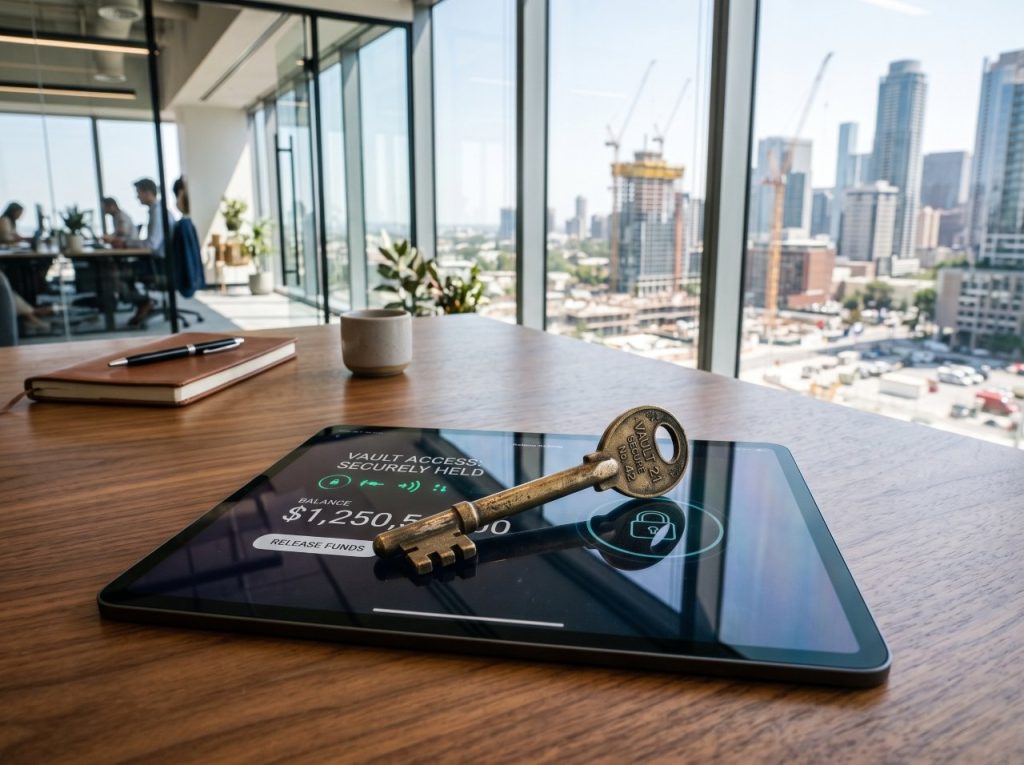
Real-life analogy: Escrow is like a security deposit when renting an apartment. The money is “frozen” by a third party, and the seller only gets it after you have signed the handover protocol. This protects you from unfinished projects and fund mismanagement.
Where Escrow is Mandatory:
- UAE (Dubai) — All off-plan projects are regulated by RERA, and payments go strictly through escrow accounts in authorized banks.
- Turkey — For properties built by state-licensed developers (TOKİ) or via the Tapu secure payment system.
- Thailand — For condominium projects currently under construction.
Where Escrow is rarely used: The secondary market in Spain, Italy, Greece, and Montenegro. There, the classic scheme involves a reservation deposit followed by full payment managed through a notary or lawyer.
Hidden Fees, Taxes, and Charges in Overseas Property Investment
The property price listed in the brochure only represents 85–90% of your final expenses. In Spain, Italy, and Greece, property acquisition taxes reach 10–13%, while in Dubai and Turkey, they range from 0–4%. A 10% difference on a €500,000 property means €50,000 that you can save by choosing the right jurisdiction. Don’t forget annual property maintenance: local taxes and utility charges usually take up 1–3% of the property’s value annually. If you are looking to buy property under €300,000, pay attention to real estate in Greece or Cyprus—the entry threshold is lower, and the property market remains highly stable.
Hidden Municipal Fees and Service Charges
This is the most underestimated expense category. In Dubai, service charges for apartments average 15–25 AED (€4–7) per square meter annually. For a 100 m² apartment, that translates to €400–€700 a year. In Turkey, the aidat (maintenance fee) ranges from €50 to €200 per year. In Spain, the comunidad is usually €100–€300 annually.
However, there is a catch: in luxury resort complexes with pools, spas, and restaurants, service charges for villas can skyrocket to €10,000–€15,000 per year. Verify this exact metric before signing the contract, not after.
Capital Gains Tax upon Sale
When buying property abroad, investors often focus on the entry but forget the exit strategy. Capital gains tax upon sale varies drastically: from 0% in the UAE to 19–24% in Spain and Italy. If you plan to sell the asset in 5 to 7 years, factor this tax into your ROI calculations. Also, keep in mind that property maintenance in Europe involves mandatory insurance and local municipal fees. For those considering real estate in Italy or Greece, it’s crucial to study local regulations in advance—the purchase process there requires mandatory notary involvement and strict legal due diligence.
The Numbers for Key Markets:
- UAE (Dubai) — 0% capital gains tax, 0% personal income tax. The ultimate benefit for global investors.
- Turkey — 0% tax when selling after 5 years of ownership. Under 5 years, there is a progressive rate up to 40%.
- Spain — 19% for EU residents, 24% for non-residents. Plus a municipal tax on land value increase (plusvalía).
- Italy — 26% capital gains tax for non-residents.
- Greece — 15% capital gains tax for individuals.
- Cyprus — 20% capital gains tax.
- Thailand — Progressive scale up to 35%, but with significant deductions if owned for more than 5 years.
- Montenegro — 15% capital gains tax.
- Bali (Indonesia) — 2.5% tax for the buyer, 5% for the seller, plus 10% VAT on brand-new developments.
Preparing Documents for KYC Compliance: The SoF Checklist
Banking compliance in 2026 is not a mere formality; it is a standalone phase of your deal. Any bank will request a Source of Funds (SoF) for transactions exceeding €50,000–€100,000. The more transparent your dossier, the faster your payment clears.

What the Standard SoF Package Includes:
- Declaration of Source of Funds — A bank form where you state the exact origin: salary, dividends, sale of stocks, or real estate.
- Proof of Income — Official tax returns from your home country (e.g., W-2, P60, or equivalent), brokerage account statements, or the sales contract of a previously owned asset.
- Bank Statements for 6–12 Months — Compliance officers want to see a history of wealth accumulation, not just a sudden lump-sum deposit.
- Annual Tax Declaration — For the latest reporting period, especially if the transfer amount exceeds your stated annual income.
- Explanatory Memorandum — If part of the funds comes from crypto liquidation, a gift, or an inheritance, a separate legal justification is required.
The Mistake That Costs You 90 Days
The most common case in our practice: A client sells a premium asset in their home country (e.g., an apartment in a capital city) for $300,000, receives the money in their account, but cannot prove they bought that exact property 10 years ago for $80,000. The compliance officer sees a “sudden influx of $300,000” and requests the original purchase deed from 2015. If that document is lost, the transfer is frozen pending a long investigation.
The Solution: Before selling any major asset globally, gather the complete historical paper trail: the original purchase contract, bank transfer receipts, and registry extracts from the National Land Registry.
“As an investor, I prefer evaluating a developer’s escrow account history over shiny marketing renders. If a developer uses escrow, it means they’ve passed strict banking audits. If they don’t, I ask very tough questions before opening my wallet.”
Mila Grebenschikova, CEO of Umbrella Group
Step-by-Step Guide to Purchasing Investment Properties
The process of buying property abroad in 2026 takes roughly 6 to 10 weeks, provided your funds are ready and your documents are in order. Each stage has specific control points where you can lose either time or money.
Step 1. Choosing the Jurisdiction and Property (2–4 weeks)
The rule here is “the goal dictates the country.” If you need a Residency Permit, look at Spain, Greece, Cyprus, or Italy (thresholds from €250,000 to €500,000). If your goal is high ROI, target Dubai (8–10% net) or Turkey (5–7%). If you seek capital diversification, Montenegro or Georgia offer a low entry barrier.
Property Selection Criteria:
- Liquidity: How long will it take to sell the asset upon exit? (In Dubai, it’s 2–4 months; in Spain, 6–12 months).
- Rental demand: Is it seasonal or year-round? Are your tenants tourists or locals?
- Developer quality: Company age, number of completed projects, and escrow history.
- Hidden costs: Service charges, property taxes abroad, and utilities.
Step 2. Legal Due Diligence (1–2 weeks)
Before paying a deposit, order a due diligence check from a local lawyer. This includes verifying title deeds, ensuring no encumbrances, and checking that the property matches its advertised specs.
Mandatory Checks:
- Real estate registry extract (Tapu in Turkey, Title Deed in the UAE, Nota Simple in Spain).
- Building and occupancy permits.
- Absence of utility or tax debts.
- Foreign ownership restrictions (e.g., Thailand permits only specific condominium quotas; the UAE restricts foreign buyers to designated Freehold zones).
Step 3. Reservation and Deposit (3–7 days)
After the check, you pay a reservation fee—usually 5–10% of the price. In the UAE and Turkey, the deposit is generally forfeited if the buyer backs out. In Spain and Italy, the deposit (arras) can be entirely lost if you cancel without a legally valid reason.
Expert Advice from Mila Grebenschikova: Always insist on adding a refund clause to the reservation agreement in case the bank rejects your money transfer. This is standard practice in Dubai and Turkey, but in Europe, lawyers rarely offer this clause proactively. Demanding it is your responsibility.
Step 4. Contract Signing and Payment (2–4 weeks)
The main Sale and Purchase Agreement (SPA) is signed at a notary office (in Europe) or the local land department (in the UAE and Turkey). Payment is executed via wire transfer or a letter of credit.
Transfer Clearance Times:
- Domestic transfer (account in the same country) — 1–2 business days.
- International SWIFT — 3–10 business days.
- Transfers requiring extended SoF compliance — 15–30 business days.
Step 5. Title Registration (1–3 weeks)
After full payment, you register your ownership rights with the local registry. In the UAE, this takes 2–4 days (via the RERA system); in Turkey, 1–2 weeks (via the Land Registry Directorate); in Spain, 2–4 weeks (via Registro de la Propiedad).
Step 6. After-Sales Property Management
Once registered, property management begins: finding tenants, paying utilities, and overseeing maintenance. At Umbrella Group, we support our clients through this entire phase—from setting up automated payments to comprehensive rental management.
Obtaining a Golden Visa and Citizenship by Investment: Programs Overview
Buying property abroad in 2026 is not just about acquiring an asset; it is a powerful migration tool. A Residence Permit (Golden Visa) can be obtained in Spain, Greece, Cyprus, Italy, Portugal, Latvia, and the UAE. Entry thresholds range from €250,000 to €700,000. It’s vital to understand that the property buying process varies per country, and real estate markets in these popular jurisdictions continue to grow steadily.
Comparison of Golden Visa & Investment Programs
| Country | Investment Threshold | Processing Time | Stay Requirement | Citizenship by Investment |
| Greece | from €250,000 | 2–4 months | None | No (eligible after 7 years of PR) |
| Spain | from €500,000 | 3–6 months | None | No (eligible after 10 years) |
| Cyprus | from €300,000 | 4–6 months | None | No (eligible after 7 years) |
| Italy | from €250,000 | 3–6 months | None | No (eligible after 10 years) |
| UAE (Dubai) | from 750,000 AED (~€185,000) | 2–4 weeks | None | No, but offers a 10-year Golden Visa |
| Latvia | from €250,000 | 3–6 months | None | No |
| Turkey | from $400,000 | 3–6 months | None | Yes, fast-track citizenship after 5 years |
Important nuance: Direct citizenship by investment is currently only available in Turkey (with real estate purchases from $400,000) and Caribbean nations (from $100,000, though mostly via non-refundable donations). In Europe, direct “passports for cash” programs closed after 2020; they only offer Residency (Golden Visas) leading to PR. Navigating overseas property purchases is easier with reliable real estate agencies. Also, take note of real estate in Montenegro—it remains one of the few European countries with highly loyal conditions for foreign buyers and very attractive property prices compared to neighboring markets.*
Investment Risks: When You Should Walk Away from a Deal
I have been selling real estate for 25 years, but I will be honest: there are scenarios where buying abroad is a mistake. Here are three cases when I advise my clients not to buy.
Case 1: “I want an apartment by the sea because it’s my lifelong dream”
If you don’t plan to rent out the property and aren’t prepared to visit at least twice a year, buying a resort property in Spain or Thailand will turn into a financial sinkhole. Utilities, taxes, and maintenance will eat up 3–5% of the property’s value annually. In 10 years, you will have spent 30–50% of the apartment’s price on maintenance without generating any income. To avoid this, thoroughly study the property market and compare conditions via reputable real estate agencies. For those looking at real estate in Bali or Cyprus, factor in rental seasonality and local property taxes. Remember: the real estate purchase process isn’t just about closing the deal; it’s about planning your maintenance budget for the next 5 to 10 years.*
Alternative: Renting a premium villa for 2–3 months a year costs €5,000–€15,000—exponentially cheaper than owning an idle asset.
Case 2: “I’m investing in Dubai because it gives 10% ROI”
A 10% ROI in Dubai is realistic for studios in JVC or Business Bay with excellent management. But that is gross ROI. Subtract service charges (5–8% of rental income), property management fees (10–15%), insurance, and vacancy periods, and your net ROI will be a solid 6–7%. That is still a fantastic yield, but it’s not 10%.
Reality Check: If you are not prepared for a tenant to move out, leaving the apartment vacant for two months without income, opt for a highly liquid asset with a slightly lower ROI but relentless, stable demand.
Case 3: “I’m buying in Bali because it’s paradise”
Bali is a wonderful place to live, but it is legally complex for foreign property buyers. Direct Freehold ownership is strictly forbidden for non-residents. Your options are long-term leasehold (25–30 years) or buying through a local nominee. Both carry significant risks: leasehold does not grant ownership, and using a nominee relies entirely on trust without solid legal protection. If you still want to invest, look at real estate in Bali’s most popular tourist hubs, where liquidity is highest. However, remember that property maintenance in a tropical climate involves extra costs, and the purchasing process can be heavily bureaucratic.
When it works: If you are comfortable with risk and view Bali as a “lifestyle base” rather than a strict investment vehicle. For capital appreciation and security, choose Dubai or Turkey instead.
Frequently Asked Questions
What is the minimum budget to buy property abroad in 2026?
The lowest barrier to entry is in Turkey and Montenegro, starting from €100,000. If you are looking at real estate in Greece or Cyprus, the budget starts around €250,000–€300,000. Real estate in Italy in the “renovation project” segment can cost as little as €150,000, but the final cost post-renovation will multiply by 1.5 to 2 times. Do not forget that maintaining a property adds an annual 2–5% to your initial investment.*
A realistic entry point is €80,000–€100,000. For this amount, you can buy a studio in Turkey (Alanya, Antalya), an apartment in suburban Dubai (International City), or a condo in Thailand (Pattaya). For European Golden Visa programs (Spain, Greece, Cyprus), budgets begin at €250,000. Always add 10–15% on top for taxes, legal fees, and compliance setup.
Can I buy real estate abroad remotely without visiting the country?
Yes, with some caveats. In the UAE and Turkey, the process is entirely digitized: power of attorney to a lawyer, electronic signatures, and video conferencing with a notary. In Spain, Italy, and Greece, remote purchases are possible via a notarized Power of Attorney (apoderamiento), but document verification takes longer. I highly recommend a personal visit for assets exceeding €300,000 to evaluate the location, noise levels, infrastructure, and actual build quality.
How do I prove the source of funds if part of the money is a gift from my parents?
A gift from close relatives is a perfectly legal source, but compliance will demand proof: a formal Deed of Gift, proof of relationship (birth certificates), and bank statements from the donor showing how they earned the money. If the donor is not an immediate relative, a notarized agreement and proof of paid gift tax (subject to your local jurisdiction’s tax code) are strictly required.
What happens if the bank blocks my money transfer?
Banks are obligated to notify you of a freeze within 3 to 5 business days. Your money doesn’t “disappear”—it gets frozen until you provide a comprehensive SoF dossier. The unblocking process takes anywhere from 2 weeks to 3 months. If you fail to prove the source, the bank has the right to reject the transfer and return the funds to the sender’s account. In this scenario, you lose your deposit unless your reservation agreement explicitly includes a refund clause for bank rejections.
Which property type is better for investment: residential or commercial?
For investors with a budget under €500,000, I strongly recommend residential property: apartments or villas. They are much more liquid, easier to manage remotely, and less vulnerable to economic downturns. Commercial real estate (offices, retail) requires deep market expertise and usually a budget starting from €1 million, though it yields 2–3% higher returns. The only exception is buying a commercial space with a stable, blue-chip tenant (e.g., a supermarket chain or a pharmacy) backed by a long-term lease.
How Umbrella Group Helps with Money Transfers and Property Purchases
We are not a bank or a payment processor. Our core mission is to eliminate risks at every single stage of the deal, especially during cross-border capital transfers.
What we do for our clients:
- Select the optimal jurisdiction and property tailored to your specific financial goals and budget.
- Assist with opening accounts in neutral transit hubs (UAE or Turkey)—we guide the process and prepare the required dossier.
- Structure the payment logistics: determine the safest transfer route, prepare the SoF package, and pre-approve it with banking compliance before you hit “Send.”
- Conduct exhaustive legal Due Diligence using trusted local attorneys.
- Accompany the transaction all the way to Title Registration.
- Take over property management post-purchase: finding tenants, paying utilities, and maintaining the asset.
If you are considering buying property abroad and want to accurately calculate your full budget—factoring in transfers, taxes, and maintenance fees—message us on WhatsApp or Telegram. We will provide an initial consultation and show you the real math of the deal before you pay a single dime in deposits.