


Table of Contents
- Conditions for Obtaining a Georgia Residence Permit in 2026
- Who is Eligible for Residency by Investment in Assets?
- New Migration Rules: The Increased Investment Threshold
- Property Requirements: Which Assets Qualify for Residency?
- Complete Document Checklist for the Investor Residence Permit
- Hidden Costs: Taxes, Fees, and Maintenance
- Renewal Rules and Consequences of Selling the Asset
- Common Mistakes and Financial Risks of a Flawed Strategy
- The Cost of a Mistake: Calculating Losses of a Bad Strategy
- Comparing Tbilisi vs. Batumi for Residency Purchases
- Safety Checklist: Legal Due Diligence Before Closing
- Expert Advice from Mila Grebenschikova
- Frequently Asked Questions
Obtaining a Georgia residence permit by purchasing real estate is a highly popular legal immigration pathway. However, starting March 1, 2026, the rules are changing: the minimum appraised property value is increasing from $100,000 to $150,000. For the migration authorities, the deciding factor is the official valuation provided by a certified appraiser, not the price written in your sales contract. The permit is issued for 1 year and can be continuously renewed as long as you maintain ownership of the asset.
Over 25 years of practice in markets like Turkey and the UAE, I have seen investors lose time and money on emotional, unverified purchases. Georgia is one of the most transparent jurisdictions globally: the property registry is public, tax rates are fixed, and the residency threshold is clear. Yet, this very simplicity hides significant risks. People often buy a “cheap” apartment for $80,000, only to discover six months later that the official appraiser values it at $65,000, immediately invalidating their residency application. In this article, I will break down the entire mechanism—from selecting the right property to renewing your residency card. If you want to eliminate risks and are looking for properties with guaranteed valuations, we recommend browsing our Georgia real estate catalog, which features only verified investment projects.
Conditions for Obtaining a Georgia Residence Permit in 2026
- The entry threshold is an appraised value of $150,000 effective March 1, 2026. Prior to this date, the limit was $100,000.
- Appraisal matters more than the contract price: The migration service strictly looks at the certified appraiser’s report, completely ignoring the transaction amount listed in your contract with the seller.
- The residence permit is issued for 1 year and can be renewed indefinitely as long as the property remains in your name. After 10 years of continuous legal residence, you can apply for Georgian citizenship.
- Eligible properties include apartments, houses, commercial real estate, and land (excluding agricultural land). The property must be officially commissioned (completed) and registered in the Public Registry.
Who is Eligible for Residency by Investment in Assets?
The Georgian Law “On the Legal Status of Aliens and Stateless Persons” allows citizens of almost all countries—including investors from the EU, the Middle East, Asia, the US, and the CIS region—to obtain a residence permit based on property ownership. Restrictions apply only to individuals with active entry bans or severe violations of migration laws.
The application can be submitted by the property owner, as well as their spouse and minor children, who are included in the application as family members. The owner’s parents are not included in this category; a separate legal basis is required for them.
An important nuance: simply buying property does not automatically grant you residency. First, you register your ownership rights in the Public Registry; second, you order an official appraiser’s report; and only then do you submit your dossier to the State Services Development Agency (SDA). Factoring in document preparation, the entire process takes between 2 and 4 months.
New Migration Rules: The Increased Investment Threshold
Effective March 1, 2026, the minimum appraised value of real estate required to obtain a residency permit has been raised from $100,000 to $150,000. This change was introduced in the bylaws supplementing the “Legal Status of Aliens” law and applies to all new applications submitted after this date.
“Raising the threshold is not a tightening of migration policy; it is simply aligning the law with current market realities. While you can still find a $100,000 apartment in Tbilisi or Batumi today, finding one in a premium segment that actually appeals to global investors has become very difficult.”
Mila Grebenschikova, CEO of Umbrella Group
If you submitted your documents prior to March 1, 2026, and your property valuation exceeded $100,000, your application is processed under the old rules. If you are just planning your purchase now, strictly target the new $150,000 requirement.
Appraised vs. Market Value: How the Migration Service Operates
The SDA does not trust the amount specified in the Sale and Purchase Agreement, as this is a common area for manipulation. A buyer and seller might declare $50,000 instead of the real $150,000 to evade property taxes. Therefore, the SDA mandates a report from a certified appraiser, who determines the true market value of the property on the specific date of the assessment.
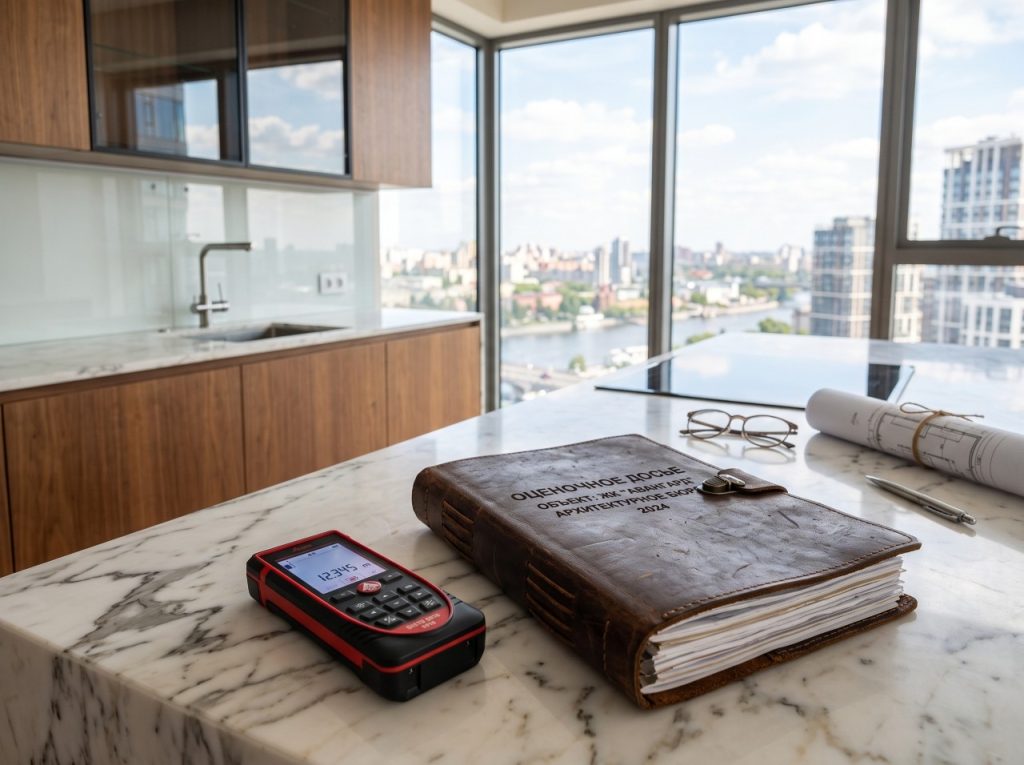
An appraiser’s report has a limited validity period—usually 6 months from the date of issue. If you bought an apartment but ordered the report a year later, the appraiser will base the valuation on the current market, not your historical purchase price.
Practical takeaway: When selecting a property, evaluate not just the seller’s asking price, but the probable official appraisal. If you buy an apartment at a 30% discount below market value (e.g., during the off-plan stage), the appraised value might fall short of the threshold. For residency purposes, it is much safer to buy a completed property at or slightly above the market price.
| Parameter | Before March 1, 2026 | After March 1, 2026 |
| Minimum Property Value | $100,000 | $150,000 |
| Evaluation Criterion | Official Appraised Value | Official Appraised Value |
| Application Processing Time | Up to 30 days | Up to 30 days |
| Residence Permit Validity | 1 Year | 1 Year |
| Renewal Eligibility | Yes, while ownership is maintained | Yes, while ownership is maintained |
Property Requirements: Which Assets Qualify for Residency?
Georgian law does not restrict the type of real estate you can buy—apartments, private houses, commercial spaces, offices, hotel rooms, and land plots are all eligible. The only strict exception is agricultural land: foreign ownership is heavily restricted, and it does not qualify you for a residence permit.
The core requirement: the property must be fully commissioned. Real estate still in the construction phase (off-plan) or unfinished projects do not qualify. You cannot register absolute ownership in the Public Registry for an uncommissioned building, and without that registration, you have no legal basis to apply.
Apartments in the Capital and Resort Zones
Tbilisi is the business hub with a relentless rental demand driven by expats and digital nomads. The average price for a 2-room apartment (60–70 m²) in a new business-class complex in premium districts like Vake or Saburtalo ranges from $120,000 to $200,000. To comfortably pass the $150,000 threshold, look for newly built complexes with high-quality finishes.
Batumi is a coastal resort city driven by seasonal demand. Here, for $150,000, you can purchase a brand-new, frontline sea-view apartment. Rental income here is highly seasonal: summer occupancy hits 90%, but drops to 30–40% in winter. If your primary goal is the residency permit rather than year-round ROI, Batumi offers more inventory within the $150,000 budget.
Private Houses, Villas, and Commercial Spaces
A $150,000 house in or around Tbilisi is usually located in the distant suburbs or represents older housing requiring renovation. In Batumi and Kobuleti, this amount can secure a house near the sea, but the construction quality and legal purity require meticulous due diligence.
Commercial real estate is an excellent option for investors looking to combine residency with high yields. A small cafe, retail shop, or office for $150,000 in Batumi’s tourist zone can generate 8–12% annually. However, managing commercial property requires either your physical presence or hiring a professional property management firm.
Complete Document Checklist for the Investor Residence Permit

The document package is standard, but minor oversights can heavily delay the process if not prepared in advance.
- International Passport — Must be valid for at least 6 months from the application date. A notarized translation into Georgian is strictly required.
- Public Registry Extract confirming ownership — Ordered online via the my.gov.ge portal or at an SDA service center. Cost: 50–100 GEL. Processing time: 1–2 days.
- Certified Appraiser’s Report — The appraiser must hold a license recognized by the National Commission for Property Issues. Cost: 200–400 GEL. Timeframe: 3–5 business days.
- Official Application Form — Filled out on-site at the SDA or online.
- 3×4 Photographs — 2 printed, matte photos on a white background.
- State Fee Receipt — 100 GEL for standard application processing.
- Documents for Family Members — Marriage certificates, children’s birth certificates, all with notarized Georgian translations.
If the property was purchased using a mortgage, you will additionally need the loan agreement and a bank statement confirming no overdue debts. An encumbrance (mortgage) is not grounds for rejection, but the bank must officially confirm it does not object to you using the property for residency purposes.
The Application Process: Step-by-Step
- Property Registration — After signing the Sales Agreement, you register the asset in the Public Registry. Time: 3–5 business days.
- Order the Appraisal — The appraiser visits the site and prepares the report. Simultaneously, you can finalize translations and photos.
- Submit to the SDA — Apply in person at a Public Service Hall or online via the portal. Online applications require an electronic signature.
- Review Period — Up to 30 calendar days. In practice, Tbilisi processes applications in 10–15 days, while Batumi takes 15–20 days.
- Issuance of the ID Card — Receiving your biometric plastic residence card takes an additional 5–7 business days.
Hidden Costs: Taxes, Fees, and Maintenance
The total budget for obtaining residency is frequently underestimated. Beyond the property’s sticker price, you must allocate funds for appraisals, translations, state duties, and legal fees.
| Expense Item | Cost in GEL | Cost in USD (Approx.) |
| State Application Fee | 100 | ~$27 |
| Appraiser’s Report | 200–400 | ~$55–110 |
| Registry Extract | 50–100 | ~$14–27 |
| Notarized Translations | 150–300 | ~$40–80 |
| Residency ID Card | 100 | ~$27 |
| Legal Transaction Support | 500–1500 | ~$140–410 |
Annual renewal is much cheaper: a 100 GEL state fee, an updated registry extract, and, if deemed necessary by the SDA, a new appraiser’s report. If the property’s status hasn’t changed, a repeat appraisal is often not required.
Property Taxes in Georgia
Georgia attracts international investors with its remarkably low property taxes. Upon purchase, you pay a one-time registration fee of about 50–100 GEL depending on the property size. There is no annual property tax for individuals unless your total global household income exceeds a specific, rather high threshold.
If you sell the property less than 2 years after purchasing it, a capital gains tax applies—15% on the difference between the sale price and the purchase price. However, if you sell the asset after exactly 2 years of ownership, the capital gains tax drops to 0%. This is a massive advantage for investors planning short-to-medium-term resale strategies.
Renewal Rules and Consequences of Selling the Asset
The residence permit based on real estate is granted for 1 year at a time. You must submit your renewal application 40 days before the card expires. The basis for renewal is the exact same property, provided it remains under your legal ownership.
If you sell the property, your legal basis for residency immediately ceases. You have 30 days to establish a new legal basis (e.g., buying another property or opening a business) or you must leave the country. Violating this timeline results in fines and a potential entry ban.
After 10 years of continuous legal residence in Georgia, you become eligible to apply for citizenship. The requirements include passing a basic Georgian language test and maintaining a clean criminal record. For many high-net-worth investors, a 10-year horizon is too long; therefore, the Georgian real estate residency is often utilized as a mobility and tax-optimization tool rather than a direct path to a passport.
Common Mistakes and Financial Risks of a Flawed Strategy
Here is an honest breakdown of situations where the “buy an apartment — get a visa” scheme fails, or worse, works against you.
Situation 1: Buying Off-Plan (Under Construction). A developer offers a heavily discounted apartment for $120,000 with an installment plan, promising completion in a year. Not only is the $150K threshold not met, but even if the price was $160,000, the building is not commissioned. Your ownership cannot be officially registered. You cannot apply for residency until the building is formally handed over by the municipality. If construction is delayed for 2–3 years, you lose both time and money.
Situation 2: Buying at a Deep Discount Below Market Value. An investor finds a “distressed” sale—an apartment for $130,000 that normally goes for $160,000. An appraiser will likely value it at $150,000–$160,000, allowing you to pass the threshold. However, if the discount is due to hidden legal issues (encumbrances, title disputes, severe structural flaws), the valuation might come in well below $150,000. Always run a strict legal check before closing.
Situation 3: Buying in Low-Demand Regions. A $150,000 property in Kutaisi or Zugdidi is likely a massive house or an oversized commercial space that will be incredibly difficult to sell in the future. You secure your residency, but you freeze your capital in an illiquid asset. If you decide to sell a year later, you will likely lose 20–30% just to find a buyer.
“At Umbrella Group, we calculate the absolute net yield, deducting all service charges and taxes. For Georgian residency, this rule also applies: buy an asset that can be profitably rented out or sold without a loss, rather than buying something just because it formally meets the price threshold.”
Mila Grebenschikova, CEO of Umbrella Group
The Cost of a Mistake: Calculating Losses of a Bad Strategy
Let’s model a classic error. An investor buys an off-plan apartment in Batumi for $140,000 at the excavation stage, assuming it will appreciate to $180,000 by completion, easily covering the residency threshold.
Construction is delayed by 14 months. During this time, the investor pays interest on installments or simply freezes $140,000 with zero income. The Batumi market dips slightly by 5–7%, and upon completion, the appraiser values the unit at $145,000. The threshold is not met. Forced to exit, the investor sells the unit at a distress price of $135,000. That’s a $5,000 direct loss, plus agent commissions and closing costs eating up another $3,000–$4,000.
The result: a loss of $8,000–$9,000 and 14 months of wasted time. The smart alternative: buying a ready-to-move-in property for $155,000–$160,000, immediately registering title, and applying for residency on day one. The $15,000–$20,000 price difference is entirely offset by peace of mind, immediate rental income, and zero risk.
Comparing Tbilisi vs. Batumi for Residency Purchases
Choosing the right city depends on your ultimate goal: is residency an end in itself, or do you expect solid investment returns alongside it?

| Criterion | Tbilisi | Batumi |
| The $150,000 Threshold — What to Buy? | 2-room apartment in a new business-class complex | 2-room apartment with a frontline sea view |
| Rental Yield (Annual %) | 5–7% | 6–9% (Highly seasonal) |
| Liquidity upon Resale | High | Medium |
| Rental Occupancy | Year-round | Seasonal (May – October) |
| Price Growth (2024–2025) | 8–12% | 3–6% |
| Investment Risks | Minimal | Heavily dependent on tourist flow |
For an investor who wants to preserve capital and earn stable, predictable income, Tbilisi is the safer bet. For those willing to accept seasonality in exchange for a sea view and higher peak summer income, Batumi is the answer.
Safety Checklist: Legal Due Diligence Before Closing
Before transferring any deposit, verify these five parameters. Failing on any single one could cost you your residence permit.
- Legal Purity — Order an extract from the Public Registry via my.gov.ge. Verify the true owner, check for arrests or liens, and review the history of ownership transfers over the past 3 years.
- Property Status — The building must be commissioned, and the unit registered as residential or commercial. If the documents say “unfinished construction,” residency will be denied.
- Appraised Value — Order a preliminary appraisal before signing the SPA. An appraiser can provide a verbal consultation for 50–100 GEL, which could save you millions.
- The Seller — Ensure you are dealing with the actual owner, not a middleman with a questionable Power of Attorney. Any POA must be strictly notarized and currently active.
- Utility Debts — Request certificates proving zero debt for electricity, water, and gas. In Georgia, utility debts transfer to the new owner.
Expert Advice from Mila Grebenschikova
Here is an unconventional strategy rarely discussed by standard brokers: intentionally buy a property priced 10–15% above the threshold. If the minimum is $150,000, your target price should be $165,000–$175,000. This creates a financial safety cushion: even if the market dips by 5–10% next year, your appraisal will remain above the threshold, ensuring you won’t lose your residency during the annual renewal.
My second piece of advice concerns timing: apply for your residence permit the very moment your ownership is registered. Do not wait for a “more convenient time.” Every month of waiting is a month during which migration laws can change. The sudden jump from $100,000 to $150,000 is a fresh reminder of how swiftly legislation adapts.
Frequently Asked Questions
Can I get a Georgia residence permit by buying property under construction (off-plan)?
No. The property must be fully commissioned and officially registered in the Public Registry. Buying off-plan gives you no legal basis to apply until the municipality signs off on the completed building.
If I bought an apartment for $100,000 before March 1, 2026, but haven’t applied yet, which threshold applies to me?
If your ownership was registered and the official appraisal was conducted prior to March 1, 2026, you can submit your documents under the old $100,000 rule. If the appraisal is dated after March 1, the new $150,000 threshold applies.
Can I get a residence permit if the property is registered to a corporate entity (a company)?
Yes, provided you are the ultimate beneficiary or managing director of the company that owns the $150,000+ asset. You will need to prove your direct connection to the company using incorporation documents and extracts from the corporate registry.
How long does the renewal process take, and what documents are required?
Renewal takes 10–15 days. You need to submit a renewal application, your valid passport, a fresh Public Registry extract proving you still own the property, and a 100 GEL state fee receipt.
What happens if I sell my property before my residence permit expires?
The legal basis for your residency terminates immediately. You are given a 30-day grace period to establish a new legal basis or you must leave the country. I highly recommend not selling your asset until you have secured a new residency permit under a different pathway to avoid breaking your legal status.
Does the Georgia residence permit give me the right to work?
Yes, a residence permit based on property ownership allows you to legally work in Georgia or run a business without requiring any additional work permits. This is a massive advantage of the Georgian migration system compared to most EU countries.
If you are considering buying property in Georgia to secure residency, it is vital to accurately calculate the appraised value and conduct flawless due diligence. The Umbrella Group team guides global investors through the markets of Georgia, Turkey, the UAE, and beyond: from selecting the perfect high-yield asset to handling all migration paperwork. Contact us on WhatsApp or Telegram—we will discuss your strategy and select premium properties perfectly aligned with the new $150,000 threshold.