

Table of Contents
- Brief Guide: How to Safely Invest in Overseas Real Estate
- Due Diligence 360°: Rules for Legal Verification of Foreign Developers
- Hidden Risks of General Contractors: Why a Developer’s Brand Won’t Protect Against Delays
- The SPA Trap: 3 Contract Clauses That Could Cost You Hundreds of Thousands of Dollars
- Umbrella Group Checklist: 5 Levels of Verification Before Transferring a Deposit
- Location Ecology: How the Municipal Master Plan Affects Asset Liquidity
- Frequently Asked Questions
Verifying the reliability of real estate developers abroad essentially comes down to three fundamental steps: auditing the land title, controlling the status of escrow accounts, and conducting a deep legal analysis of the Sales and Purchase Agreement (SPA) for hidden penalties. Over 25 years of operating in the Turkish and UAE markets, I have witnessed various economic cycles. The primary reason investors lose capital is not due to market crises, but rather blind faith in beautiful 3D renders without conducting proper due diligence. Recently, our team prevented a $1.2 million deal in Dubai: a client was about to transfer funds to a well-known brand, unaware that the land beneath the luxury residential complex was mortgaged to a bank. This article is your baseline security protocol. However, if you have already selected a property and are preparing to sign a contract, we strongly recommend ordering professional legal support for real estate transactions so that Umbrella Group experts can uncover any hidden encumbrances before you transfer the first tranche.
Brief Guide: How to Safely Invest in Overseas Real Estate
- Investment security in Dubai is built on the synergy between the Dubai Land Department (DLD) and escrow accounts, which block construction companies from directly accessing your funds.
- In the Turkish real estate market, the key control points are the absence of bank encumbrances on the land and the presence of a commissioning certificate (Iskan).
- A prominent developer’s name does not insure against the risk of stalled construction. You must evaluate the financial health of the general contractor — the company that is actually pouring the concrete.
- A standard SPA often contains a clause prohibiting the resale of the apartment until 30-40% of the total value is paid, which ruins quick-exit (flipping) strategies.
Due Diligence 360°: Rules for Legal Verification of Foreign Developers
Deep due diligence of overseas property is not about reading investor reviews on forums; it is about officially requesting registry extracts, auditing the developer’s financial health, and verifying building permits.
Investing in off-plan properties historically shows yields of 8-12% per annum. However, this capital appreciation potential is inextricably linked to legal risks. When buying shares in a tech startup, you naturally scrutinize its P&L statement and debt load. Purchasing overseas real estate requires an identical approach. We do not trust brochures — we trust extracts from state cadastres.
Due diligence procedures vary dramatically depending on the jurisdiction. What works in the Emirates is completely inapplicable on the shores of the Bosphorus. Understanding these nuances allows you not just to buy square meters, but to guarantee your property rights while preserving the liquidity of your asset.
DLD, RERA, and Escrow Accounts: The Legal Shield in Dubai
In Dubai, a foreign developer has no direct access to the buyer’s money. Funds are deposited into an escrow account controlled by the DLD and are released to builders in tranches strictly upon the completion of specific construction milestones.
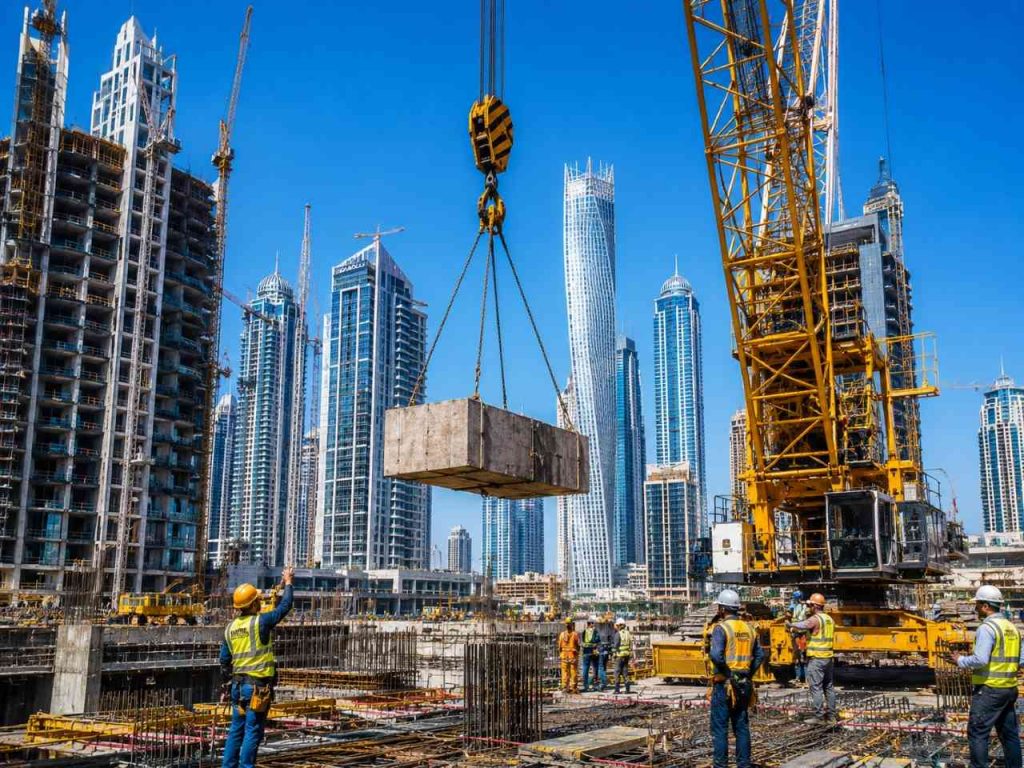
The UAE market is highly structured and transparent thanks to strict government regulation. The Real Estate Regulatory Agency (RERA) obliges every development company to fully pay for the land plot before sales can commence. This effectively eliminates fly-by-night companies with zero authorized capital.
When transferring funds for an apartment, you send them not to the developer’s corporate account, but to a designated escrow account. A DLD engineer personally visits the site. Only after confirming, for example, that the foundation is 20% complete, does the bank unlock the corresponding financial tranche. This mechanism reduces the risk of a classic stalled project to a statistical margin, thoroughly protecting your investment.
The cost of ignoring payment rules is high. Sending a deposit directly to an agent or to a developer’s foreign account, bypassing the escrow system, strips the investor of government protection. In the event of a construction freeze, recovering this capital through the courts will be practically impossible.
Iskan, Tapu, and Encumbrances: Specifics of the Turkish Market
When buying new-build properties in Turkey, it is critical to demand a land plot extract and register a Tapu with an established construction servitude (kat irtifakı) to protect against shadow debts.
Developers in Turkey operate in a different legal environment. There is no escrow account system comparable to Dubai’s, so the entire burden of verification falls on the shoulders of your lawyers. The main document confirming your ownership rights is the Tapu (Title Deed). However, obtaining a Tapu during the construction phase (kat irtifakı) does not guarantee that the building will be successfully commissioned.
The key security factor here is verifying the Iskan (Occupancy Permit). This is the master act of commissioning. If there are multiple construction violations, the municipality will refuse to issue the Iskan. Without it, you will not be able to officially connect water and electricity meters at residential rates (you will be forced to pay commercial rates, which are significantly higher), and you will also face major hurdles when applying for a residence permit.
A hidden risk in the Turkish market lies in bank encumbrances (ipotek). Small developers often take out loans secured against the land on which they are building the complex. If the developer goes bankrupt, the bank will seize the land along with your unfinished villa. Therefore, prior to the transaction, Umbrella Group’s lawyers mandatorily request a so-called “clean paper” (Takdiyat) from the Cadastral Office.
Expert Advice:
As an investor, I prefer to analyze not only a company’s financial report but also the operational speed of its construction cranes. If you are considering overseas real estate, find a way (or entrust us) to request video footage from the construction site at 30-day intervals. The actual dynamics of pouring concrete will reveal the true state of affairs better than any auditor.
Hidden Risks of General Contractors: Why a Developer’s Brand Won’t Protect Against Delays
Buying a property from the world’s largest developers does not eliminate the risk of handover delays, as these giants frequently delegate tasks to subcontractors suffering from budget deficits.
A dangerous myth circulates among investors: “If I buy an apartment from a Top-5 developer, there are no risks.” In practice, the assembly-line production of commercial real estate often leads to diminished quality control. Massive corporations build dozens of complexes simultaneously.
The real threat lies in the “shadow debt” of the general contractor. A developer in Dubai or Istanbul often acts merely as the conceptualizer: they buy the land, design the concept, launch the marketing, and collect the funds. However, the physical construction is carried out by an entirely different building company. If this contractor experiences cash flow gaps on other projects, your construction site will stall, regardless of the parent brand’s flawless reputation.
This is precisely why a boutique development company building one or two premium-class buildings often delivers superior finishing quality and hands over the keys exactly on time. They have no margin for error; their reputation depends entirely on each specific project.
The SPA Trap: 3 Contract Clauses That Could Cost You Hundreds of Thousands of Dollars
Signing an SPA (Sales & Purchase Agreement) without an independent lawyer risks asset loss due to hidden penalties for late payments and bans on resale until a specific construction milestone is reached.
The SPA is the primary real estate sales contract. The problem is that overseas developers’ sales departments draft it to maximize their own protection, not yours. Marketing brochures promise flexibility, while the legal text locks in severe sanctions.
| Broker’s Marketing Promises | The Harsh Legal Reality in the SPA Text |
| “You can easily resell the property in six months and profit from the price appreciation.” | A clause prohibiting the assignment of rights (requiring an NOC) until the investor has paid between 30% and 40% of the property value according to the payment plan. |
| “We offer a convenient and flexible interest-free installment plan.” | A penalty clause: if a tranche is delayed by 15-30 days, the developer has the right to terminate the contract, retaining up to 40% of the total contract value. |
| “All taxes and fees are already included in the final price of the apartment.” | A hidden obligation for the buyer to pay the Oqood (registration fee) amounting to 4% of the value + administrative duties on top of the contract price. |
If your goal is portfolio diversification and passive income in hard currency, the slightest inattention to the contract text will lower your final ROI. For instance, the lack of explicitly stated penalties imposed on the developer for delaying the handover means your money could be frozen for an extra 6-12 months without any compensation.
Umbrella Group Checklist: 5 Levels of Verification Before Transferring a Deposit
Safely choosing verified developers involves 5 stages: auditing the license, verifying land status, analyzing the track record of completed projects, investigating lawsuits, and approving the master plan.

Our lawyers apply this protocol on a daily basis. You can use it as a benchmark for your own independent analysis or to evaluate your broker’s competence.
- Verification of Land Plot Status. We request a Title Deed (UAE) or a recent Takdiyat (Turkey). The land must be 100% owned by the developer and free of any pledges to financial institutions.
- Audit of Permitting Documentation. We check for the presence of a Building Permit. You should never invest at a stage where the developer has only submitted documents for project approval.
- Financial Compliance and Escrow. We verify the official status of the escrow account in the DLD registries (via the Dubai REST app) or similar databases. The account number on the invoice must exactly match the number in the state registry.
- Track Record Analysis. We examine the portfolio of completed projects over the last 5-7 years. What matters are not beautiful facades, but the quality of concealed MEP (mechanical, electrical, and plumbing) systems 3 years post-handover, alongside genuine investor reviews regarding the property management company.
- Litigation Monitoring. Through local registries, we check for any class-action lawsuits filed by previous buyers against the developer or their general contractor.
Location Ecology: How the Municipal Master Plan Affects Asset Liquidity
To preserve the liquidity and aesthetics of a luxury villa, it is imperative to thoroughly study the district’s master development plan for the next 10 years to rule out the sudden appearance of noisy highways right outside your windows.

At Umbrella Group, we believe that real estate is more than just concrete and yield charts. It is a space that shapes your state of mind, restores your energy, and provides harmony. Choosing a developer can be compared to choosing a meditation master: external trappings mean nothing if there is no internal depth and attention to detail.
Pragmatic document analysis must be complemented by an ecological and social verification of the location. Developers often sell apartments with the “premium” label, boasting gorgeous bay views. However, without checking the municipal Master Plan, you risk discovering that in two years, the construction of a 40-story residential complex or a high-speed expressway will begin right in front of your balcony.
We always verify future building density, the availability of parks, the quality of local sewage treatment plants, and the actual demographic makeup of the community. True premium class isn’t about golden door handles; it’s about eco-friendly materials, noise insulation, air purity, and neighbors who share your values. Only the synergy of ironclad legal security and a conscious approach to location selection creates an asset that will bring you joy and multiply your capital for decades.
Frequently Asked Questions
What happens to my money in Dubai if the developer goes bankrupt?
Thanks to the escrow account system, your funds are protected by the Dubai Land Department (DLD). If a developer is unable to continue construction, the DLD either transfers the project to another company (retaining your original contract terms) or refunds the investors’ money directly from the escrow account.
Can I legally repatriate rental income to my foreign bank account?
Yes, both the UAE and Turkish markets allow for the free repatriation of capital. With properly registered property rights, you can seamlessly receive rental payments in hard currency to accounts in local or international banks.
Do I need to be physically present abroad to sign the SPA and verify documents?
No. Modern legislation allows transactions to be conducted entirely remotely. Our lawyers conduct the due diligence and represent your interests via a Power of Attorney (issued through a consulate), while the signing of contracts and payments are executed through secure digital channels and bank transfers.